
Skip to content
SUBSCRIBE
  • Technology
    download (94)
    Technology
    Modernize Customer Experiences: A Salesforce for State and Local Government
    July 9, 2025
    Saurav Dhawale
    No posts found
    download - 2025-07-11T145821
    Technology
    Strengthening Healthcare Security and Reducing Costs Through Modern IGA
    download (36)
    Technology
    Google Cloud VMware Engine Supercharged With Google Cloud NetApp Volumes
    download (99)
    Technology
    PingOne Neo Verificación y acreditación para la identidad descentralizada
    No posts found
    View All
  • HRTech
    Why Tax and IT Need to Work Together When Migrating to SAP S/4HANA
    Hrtech
    Why Tax and IT Need to Work Together When Migrating to SAP S/4HANA
    January 30, 2026
    prathmesh kupade
    No posts found
    Screenshot-2026-01-30-190621
    Hrtech
    Unlocking Merchant Growth: Building a Payment Roadmap for Success
    The SUSE Guide to Edge Computing in a Cloud Native World 2022
    Hrtech
    The SUSE Guide to Edge Computing in a Cloud Native World 2022
    Reduce Licensing Costs and Modernize Enterprise Workloads
    Hrtech
    Reduce Licensing Costs and Modernize Enterprise Workloads
    No posts found
    View All
  • Finance
    The Unexpected Costs of Running A Small Business
    Finance
    The Unexpected Costs of Running A Small Business
    January 21, 2026
    prathmesh kupade
    No posts found
    download 32
    Finance
    Key Insights into QSRs' Affordability and Profitability Balancing Act -- And How To Successfully Bridge Gaps
    Software bill of materials (SBOM)
    Finance
    Software bill of materials (SBOMs) a critical component of software supply chain security
    Operazioni di messa in sicurezza per beni di largo consumo
    Finance
    Operazioni di messa in sicurezza per beni di largo consumo
    No posts found
    View All
  • Marketing
    download 18
    Marketing
    The state of retail operations
    July 10, 2025
    Saurav Dhawale
    No posts found
    Edge and Industrial IoT at Scale
    Marketing
    Edge and Industrial IoT at Scale
    6 Ways ERP Systems Supercharge Construction Cash Flow
    Marketing
    6 Ways ERP Systems Supercharge Construction Cash Flow
    Tools Designed for Security Could Be Your Biggest Security Threat
    Marketing
    Tools Designed for Security Could Be Your Biggest Security Threat
    No posts found
    View All
  • Resources
    • Web Development
    • Technology 2025
    • Supply Chain
    • Storage
    • Security
    • Networking And Communication
    • MSP
    • Library
    • IT Security
    • IT Management
    • IT Infrastructure
    • IOT
    • Global Trade
    • Stock Market
    • Insurances
    • Banking
    • Finance 2025
    • ERP
    • Ecommerce
    • Ebook
    • Digital Advertising
    • Data Security
    • Data Management
    • Content Marketing
    • Cloud Migration
    • Cloud Computing
    • Big Data
    • B2B Marketing
    • Audit And Compliance
    • Artificial Intelligence
    • Application Development
    • API
    • Analytics
    • Abm Marketing
  • Contact
  • About
    • Privacy Policy
    • Terms of Use
    • Cookies Notice
  • work-with-us
    • Advertise With-Us
  • Technology
    download (48)
    Technology
    How grocers are investing in in-store technology
    July 8, 2025
    Saurav Dhawale
    No posts found
    Using Real-World Evidence for External Control Arms
    Technology
    Using Real-World Evidence for External Control Arms
    Protecting the IT attack surface while advancing digital transformation
    Technology
    Protecting the IT attack surface while advancing digital transformation
    Webolytics Deck
    Technology
    Webolytics Deck
    No posts found
    View All
  • HRTech
    How Con Edison reduces risk and optimizes operations
    Hrtech
    How Con Edison reduces risk and optimizes operations
    January 19, 2026
    vaishnavi chavan
    No posts found
    Cyberproof Multicloud Environments
    Hrtech
    Cyberproof Multicloud Environments
    Top 4 Ways to Navigate and Optimize SAP Migration
    Hrtech
    Top 4 Ways to Navigate and Optimize SAP Migration
    Value in the Seams. Lower Costs and Drive Better Outcomes with a Single Vendor for Multiple IT Services
    Hrtech
    Value in the Seams. Lower Costs and Drive Better Outcomes with a Single Vendor for Multiple IT Services
    No posts found
    View All
  • Finance
    The Essential Technology Needs for Hybrid Work
    Finance
    The Essential Technology Needs for Hybrid Work
    January 14, 2026
    prathmesh kupade
    No posts found
    The Power of Next-Generation SD-WAN with App-Defined Fabric
    Finance
    The Power of Next-Generation SD-WAN with App-Defined Fabric
    Ein datenorientierter Ansatz zur Vereinfachung der komplexen Datenverwaltung
    Finance
    Ein datenorientierter Ansatz zur Vereinfachung der komplexen Datenverwaltung
    download 32
    Finance
    Key Insights into QSRs' Affordability and Profitability Balancing Act -- And How To Successfully Bridge Gaps
    No posts found
    View All
  • Marketing
    Becoming a Cloud Local: How Organizations Settling Into the Cloud Can Find a Surer Path to Business Value
    Marketing
    Becoming a Cloud Local: How Organizations Settling Into the Cloud Can Find a Surer Path to Business Value
    January 21, 2026
    prathmesh kupade
    No posts found
    Why Small Businesses Are Turning to AI for Growth?
    Artificial Intelligence
    Why Small Businesses Are Turning to AI for Growth?
    The Total Economic Impact™ of ServiceNow HR Service Delivery​
    Marketing
    The Total Economic Impact™ of ServiceNow HR Service Delivery​
    Digital-Marketing-15-Powerful-Growth-Strategies-for-2025
    Content Marketing
    Digital Marketing: 15 Powerful Growth Strategies for 2025
    No posts found
    View All
  • Resources
    • Web Development
    • Technology 2025
    • Supply Chain
    • Storage
    • Security
    • Networking And Communication
    • MSP
    • Library
    • IT Security
    • IT Management
    • IT Infrastructure
    • IOT
    • Global Trade
    • Stock Market
    • Insurances
    • Banking
    • Finance 2025
    • ERP
    • Ecommerce
    • Ebook
    • Digital Advertising
    • Data Security
    • Data Management
    • Content Marketing
    • Cloud Migration
    • Cloud Computing
    • Big Data
    • B2B Marketing
    • Audit And Compliance
    • Artificial Intelligence
    • Application Development
    • API
    • Analytics
    • Abm Marketing
  • Contact
  • About
    • Privacy Policy
    • Terms of Use
    • Cookies Notice
  • work-with-us
    • Advertise With-Us
Home » Cloud Migration
Category:

Cloud Migration

Cloud Migration
Cloud Migration

How to Plan Cloud Migration Without Downtime or Data Loss

by ailcia sierra April 25, 2026
written by ailcia sierra

Cloud technology has become an essential part of how modern businesses operate. Many companies are adopting cloud migration to move their systems and data to the cloud, making their operations more flexible and scalable. While doing cloud migration, businesses often worry about potential issues and the risk of losing important information. Even a small disruption during the process can impact daily operations and affect how customers perceive the company’s reliability and performance.

Moving to the cloud is not about moving data from one place to another. You need a plan to make sure everything keeps working while you are doing it. Companies need to look at what they have and think about what could go wrong. Then they need to come up with a plan to stop these problems from happening.

Another big problem is keeping data safe. When you move data it can get. Messed up if you are not careful. That is why you need a plan, for moving data and the right tools to help you. If you do it right everything will work smoothly. It will not affect the daily work of the company. Cloud technology and cloud migration are very important for businesses to get right. Cloud migration is something that companies need to think about carefully to make sure they do not have any problems.

What is Cloud Migration?

Cloud migration is when you move your data, applications and workloads from your computers to a cloud environment. This also means moving data from one cloud to another. It helps businesses work better and handle work.

There are ways to do cloud migration. Each way depends on what your business needs and what systems you have. Picking the way is very important. A good plan for migration means trouble and better performance. It also helps organizations get benefits for a time. You get results, with cloud migration.

Key Types of Migration

  • Rehosting (Lift and shift)
  • Replatforming
  • Refactoring
  • Hybrid migration
  • Cloud migration
Cloud Migration

Types of Cloud Migration

TypeDescriptionBenefit
RehostingMove apps as-isFast migration
ReplatformingMinor changesBetter performance
RefactoringRedesign appsHigh efficiency
HybridMix environmentsFlexibility

Why Downtime is Bad for Business

Downtime is really bad for business operations. It can hurt the trust that customers have in a company. When systems are down the company loses money. The customers have a bad experience. So it is very important to try to minimize downtime when something is being moved or changed.

If systems are always available then customers can use the services they need without any problems. This is very important for businesses that need to be working in time. Planning ahead and testing things can help reduce the risks of downtime. If companies use the plans they can keep everything running smoothly.

Key Impacts of Downtime

  • Loss of money that the company could be making
  • Customers are not happy, with the service
  • People who work for the company are not able to do their jobs well
  • The companys reputation is hurt

Preventing Data Loss During Migration

Data loss is a problem when we move to the cloud. It can happen because of mistakes or when systems fail. We need to be very careful to prevent this from happening.

We need to make copies of our data before we start moving. This way if something goes wrong we can get our data back. So companies should make copies of their data. We also need to check our data to make sure it is all correct. This helps us know that all of our data is moved without any errors.

Key Strategies

  • Data backup
  • Data validation
  • Secure transfer
  • Monitoring systems

We should always use Data backup to protect our Data. We should also use Data validation to check our Data.. We need to use Secure transfer to keep our Data safe.. Finally we need to use Monitoring systems to keep an eye on our Data during the migration.

Data Protection Methods

MethodPurposeBenefit
BackupProtect dataRecovery
ValidationCheck accuracyReliability
EncryptionSecure transferSafety
MonitoringTrack processControl

Cloud Migration Strategy

A strong migration strategy is essential for success. It helps businesses plan each step carefully and avoid risks. Without a strategy, migration can lead to issues.

The strategy should include assessment, planning, and execution. Each stage must be carefully managed. Businesses should also test their systems before and after migration. This ensures everything works properly.

Key Steps

  • Assess current systems
  • Define goals
  • Choose migration approach
  • Test systems
  • Monitor performance

Cloud Migration Tools

Having proper tools makes the migration process much easier and faster. Such tools can automate the whole process to save time and efforts and minimize possible mistakes.

There are various kinds of tools, each of which serves its purpose. Selecting appropriate tools is an important stage that should be done considering all the organization’s requirements.

Major Tools

  • Data migration tools
  • Monitoring tools
  • Automation tools
  • Security tools

Cloud Migration Tools

Tool TypePurposeBenefit
Data ToolsTransfer dataSpeed
Monitoring ToolsTrack processControl
Automation ToolsReduce manual workEfficiency

Hybrid Cloud Strategy

Hybrid cloud is a way to use both your own systems and cloud systems together. This gives you the freedom to do things your way and be in control. Hybrid cloud strategy helps businesses manage their workloads in a way.

Key Points

  • Flexibility is an advantage of hybrid cloud
  • You have control, over the cost
  • Hybrid cloud is very scalable
  • It also gives you performance

Multi-Cloud Strategy

Multi-cloud uses multiple cloud providers. It reduces dependency on one provider. This improves reliability.

Key Points

  • Reduced risk
  • Better performance
  • Flexibility
  • Cost optimization

Multi-Cloud Benefits

BenefitDescription
ReliabilityLess downtime
FlexibilityMore options
PerformanceBetter speed

Security in Cloud Migration

Security is critical during migration. Businesses must protect data and systems. This ensures safe operations.

Key Points

  • Data protection
  • Secure access
  • Monitoring
  • Risk management

Cost Management

Managing costs is important during migration. Businesses should plan budgets carefully. This avoids overspending.

Key Points

  • Budget planning
  • Cost tracking
  • Resource optimization
  • Efficiency
Cloud Migration

Future of Cloud Migration

Cloud migration is going to get a lot better with technology. This will make cloud migration more efficient for companies. Companies will start to use better cloud migration solutions.

Key Points

  • Better tools for cloud migration
  • Cloud migration will be more efficient
  • More companies will adopt cloud migration
  • We will see a lot of innovation, in cloud migration

Cloud Migration Has Its Set Of Problems

Cloud migration is not easy. It has a lot of problems that come with it. These problems are things like issues and security risks and managing the cost. Businesses have to deal with these problems when they migrate to the cloud.

If you plan things properly you can avoid a lot of trouble. This means you will have a transition to the cloud.

You have to keep an eye on things all the time. This way if something goes wrong you can fix it away.

Key Challenges

  • Technical complexity is a problem in cloud migration
  • Security risks are a concern for businesses when they migrate to the cloud
  • High costs can be a challenge, for companies
  • Downtime risks are something that businesses have to think about when they migrate to the cloud

Best Practices for a Smooth Migration

To have a migration it’s good to follow some key steps. Organizations should plan their migration carefully. They should also test everything before its live.. They should keep an eye on things during and, after the migration. Updating procedures and training staff are also important. This way staff members know whats going on and are ready.

Here are some main things to focus on:

  • Planning
  • Testing
  • Monitoring
  • Training

Best Practices

PracticeBenefit
PlanningBetter control
TestingFewer errors
MonitoringQuick fixes
TrainingImproved skills

Conclusion

Moving to the cloud does not have to be a problem if you plan it the right way. You need to have a plan test everything and use the right tools. Then businesses can move their systems to the cloud without stopping their work or losing important information. You have to get ready of time know what might go wrong and be careful with each step.

If you focus on keeping your data safe watch everything all the time and move things to the cloud a little at a time you can make the change smooth and reliable. It is not about moving your systems to the cloud. It is about doing it in a way that keeps everything working without any problems. This helps keep your customers happy and makes sure your business keeps running.

In the end moving to the cloud successfully is, about planning and doing things right. Companies that take the time to plan and get used to technology will find it easier to grow work better and stay ahead of others in the long run.

Frequently Asked Questions

1. What is cloud migration?

Cloud migration is when you move your data, applications and systems from your servers to a cloud environment or from one cloud to another.

2. How can businesses avoid downtime during cloud migration?

To avoid downtime businesses should do things like move everything over a little at a time test their systems ahead of time and have two versions of their environment running at the time while they are making the switch.

3. What causes data loss during cloud migration?

Data loss can happen for a reasons like if you do not plan very well or if there are mistakes in the system or if you do not make copies of your data or if something gets interrupted while you are moving everything over.

4. How can data loss be prevented during migration?

To prevent data loss you should make copies of all your data check that everything is okay after you move it use tools that are made for moving data safely and keep a close eye on everything the whole time.

5. What is the best cloud migration strategy?

The best way to do cloud migration is different for each business. Some common ways to do it are to just move everything over as it is or to make some changes to your systems so they work better in the cloud or to completely rebuild your systems from scratch depending on how complicated it is and what you want to achieve with cloud migration.

6. What tools are used for cloud migration?

There are a lot of tools that can help with cloud migration, like tools that move your data tools that monitor how everything is working tools that automate a lot of the process and tools that help keep everything all of which can help make the transition to the cloud a lot smoother.

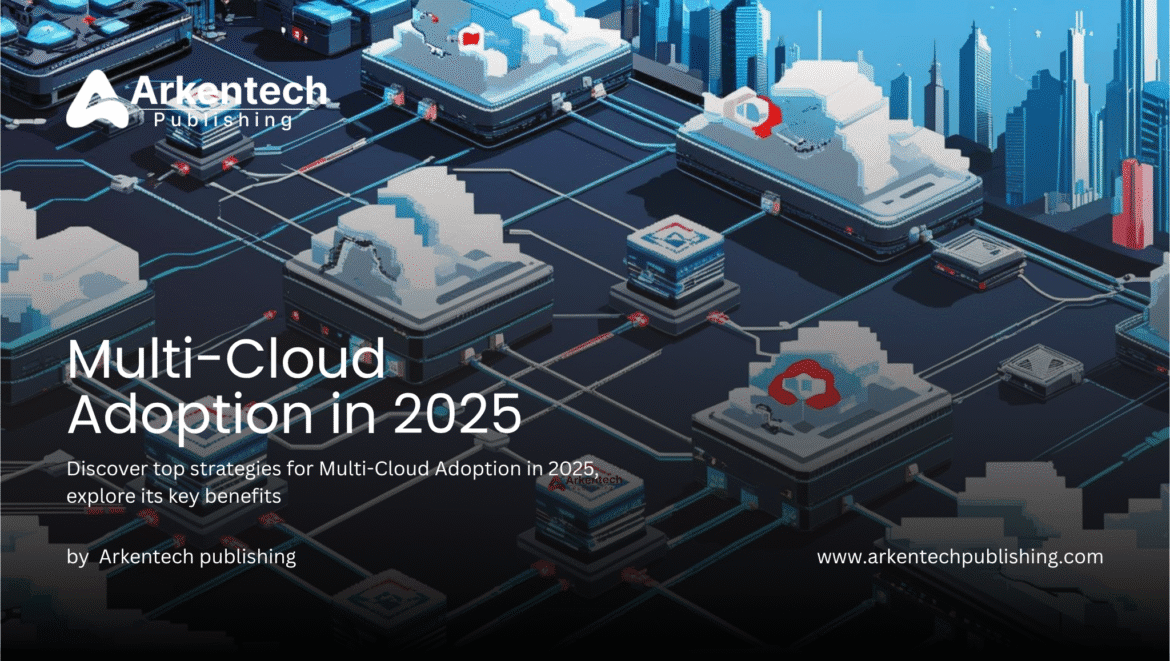
April 25, 2026 0 comment
0 FacebookTwitterPinterestEmail
cloud migration
Cloud Migration

Why Traditional Cloud Migration Fails for AI Retrieval Workloads

by ailcia sierra April 7, 2026
written by ailcia sierra

Historical cloud migration does not work with AI retrieval workloads since it is based on compute, storage, and cost efficiency rather than retrieval speed, data structure, semantic indexing, and real-time access. It takes AI systems like those constructed over the Retrieval- Augmented Generation to need vector search, low-latency data pipelines, and context-aware data architectures, which are not available under legacy lift-and-shift cloud strategies. Consequently, systems get sluggish, less precise, and incapable of facilitating the new AI-driven decision-making. Migration to the cloud has so far been viewed as a technical upgrade.

To lower the cost of infrastructure, enhance scalability, and boost operational efficiency, organizations transfer their workloads, in their on-premise systems, to cloud services such as Amazon Web Services, Microsoft Azure, and Google Cloud Platform. This was a good model in the traditional applications like web hosting, ERP systems and data warehousing.

Nevertheless, the emergence of AI systems, in particular, retrieval-based architectures has redefined the way infrastructure has to work. The processing of data is no longer the only concern of AI workloads. They are concerned with accessing the correct information immediately, interpretation, and presentation of correct results in real-time. The move has revealed one of the biggest shortcomings of the conventional cloud migration approaches.

Firms that use migration methods that are out of date are currently experiencing slower AI execution, increased latency, and lower model accuracy. The issue does not lie with the cloud. The issue is the design of systems in the cloud.

The Shift from Storage to Retrieval

The classical cloud systems were modeled on the basis of data storage and data processing. Workloads in AI retrieval are oriented towards retrieving the correct data at the correct moment. This difference can be small, however, it alters all that concerns infrastructure design.

Gartner estimates that more than 80 percent of enterprise data is unstructured, in the form of documents, emails and media files. AI systems will be required to extract meaning out of this data, and not merely store it. This does not need storage capacity but semantic understanding.

The more recent AI systems like LangChain and LlamaIndex are designed to support the retrieval processes. They rely on structured pipelines connecting data sources, embeddings, and vectors databases. Conventional cloud migration is not responsive to these requirements.

Why Traditional Cloud Migration Fails

Retrieval pipelines require centralized and well-structured data access. The classical models of migration tend to be lift-and-shift. Workloads are migrated to the cloud without the redesign of the underlying architecture. Although this simplifies the complexity of migration, it does not optimize AI workload systems. The former problem is data architecture. Majority of the migrated systems are based on relational databases that are normalized towards structured queries.

The retrieval systems based on AI need to have vector databases that enable similarity search and semantic matching. Pinecone and Weaviate are technologies that are made specifically to do this.

The second one is latency. Retrieval systems based on AI rely on the speed of response. Minor delays can decrease the accuracy of outputs generated. Conventional cloud systems tend to add several levels of processing, contributing to latency.

The third problem is unavailability of semantic indexing. AI models do not search for exact matches. They search for meaning. The systems cannot give relevant results without embeddings and vector indexing.

The fourth problem is fragmentation of data. Lots of organizations store data in various systems and it is hard to find a single source of truth with the help of AI. Retrieval pipelines demand centralized and well-organized data retrieval.

Traditional Cloud vs AI Retrieval Infrastructure

FactorTraditional Cloud MigrationAI Retrieval Workloads
Data TypeStructured dataUnstructured and semantic data
Query MethodSQL-based queriesVector similarity search
Performance GoalCost and scalabilitySpeed and accuracy of retrieval
StorageRelational databasesVector databases
Latency SensitivityModerateExtremely high
ArchitectureMonolithic or layeredModular and retrieval-first
OutputData processingContext-aware generation

This comparison highlights why traditional systems struggle to support AI workloads. They were not designed for retrieval-driven architectures.

The Role of Retrieval-Augmented Systems

AI systems that are retrieval-based combine retrieval with language generation. Models access pertinent information and apply it to produce responses instead of basing their answers solely on information that is pre-trained. The method enhances precision and minimizes hallucinations.

A study conducted at Stanford university demonstrates that factual accuracy can be largely enhanced with retrieval-augmented systems than with language models alone. This enhancement will however be subject to the quality and speed of the retrieval layer.

When the underlying cloud infrastructure is not capable of providing expeditious and pertinent retrieval, the whole mechanism fails to provide value.

Data Pipeline Challenges

AI retrieval loads need to be fed with data constantly, processed, and indexed. Conventional cloud pipelines are batch-oriented i.e. data is processed at fixed intervals and not in real time.

This introduces some separation between available and accessible data. Depending on old information, AI systems can produce outputs, which are less reliable.

The contemporary data pipelines need to be able to provide real-time updates, streaming systems, and automated indexing. In the absence of these abilities, performance on retrieval is impaired.

Latency and Its Impact on AI Accuracy

Latency is not necessarily only a performance problem. It has a direct influence on AI output. Models can use incomplete or less relevant data in cases where retrieval systems are slow.

Google Research suggests that the response relevance in AI systems can be greatly enhanced through reducing the retrieval latency. This renders low-latency architecture as an essential condition to the present-day cloud environment.

Semantic Search and Vector Databases

Semantic search enables the AI systems to read the query instead of matching words. This is done by embeddings that are data in a numerical form that is contextual.

These embeddings are stored in vector databases and allow similarity search to be performed quickly.

AI systems lack the ability to retrieve the information that is important without the help of the vectors search. Generic cloud migration plans seldom involve integration of a vector database. This is among the primary causes of failure of AI workloads.

Real-World Example

A multinational company has moved their data warehouse to the cloud through the conventional lift-and-shift method. Although the migration lowered the cost of infrastructure, the company experienced challenges in the process of implementing AI-driven search.

It was based on SQL queries that could not be used in semantic search. Consequently, the AI outputs were irrelevant or incomplete. Once the architecture had been redesigned to add the addition of the vector databases and the real time pipelines, the accuracy of retrievals and the response time improved by a great deal in the company.

How to Fix Cloud Migration for AI Retrieval

Organizations should not only give up the old migration strategies but embrace retrieval-first approach. These include restructuring data structure, incorporating vector databases, and streamlining pipes to access data in real-time.

The development of cloud infrastructure must be made to sustain AI workloads. This incorporates pipelines, semantic indexing, and low-latency data access.

Organizations should not consider cost and scalability as the only important factors but retrieval performance and access to data.

Data-Backed Insights

MetricInsight
80 percentEnterprise data is unstructured according to Gartner
60 percentAI project failures are linked to data issues (IBM)
30 to 50 percentImprovement in response accuracy with retrieval-based systems (research from Stanford University)
Milliseconds matterLower latency improves AI response relevance (Google Research)

These lessons emphasize the significance of data organization, retrieval rate and architecture of AI systems.

A frequent concern is cost. While retrieval-based architectures may require additional investment, they deliver better accuracy and efficiency, leading to higher long-term value.

The question most organizations post after cloud migration is why its AI systems fail to work. The solution is that migration does not make systems AI-ready. The infrastructure should be restructured to accommodate retrieval processes. The other widespread query is whether AI workloads can be handled by traditional databases.

The response is negative. AI systems need semantic indexing and vector databases to operate successfully. Businesses are also interested in finding out how to enhance AI performance in the cloud. The answer to this is to concentrate on the speed of retrieval, accessibility of the data and real-time pipelines.

One of the most common concerns is cost. Although retrieval-based architectures might demand extra investment, they are more precise and efficient, resulting in the greater long-term value.

Conclusion

Conventional cloud migration models were created in a different age. They are storage, compute, and cost-efficient but do not consider the requirements of AI retrieval workloads.

The contemporary AI systems need quick, precise, and context-sensitive data retrieval. This will require a paradigm change in the design of cloud infrastructure.

Those organizations that acknowledge the change and modify their strategies will be in a better position to succeed in an AI-driven world. The ones who do not will remain in the midst of performance challenges and missed opportunities.

April 7, 2026 0 comment
0 FacebookTwitterPinterestEmail
Multi-Cloud Adoption in 2025 - Benefits and Enterprise Strategy
Cloud Migration

Multi-Cloud Adoption in 2025: Strategies, Benefits & Enterprise Challenges

by Saurav Dhawale August 6, 2025
written by Saurav Dhawale

Introduction

Since companies still have their rapid change in clouds, adoption with several Multi-Cloud Adoption make a central strategy in 2025. With the growing demand for flexibility, performance and seller flexibility, companies are no longer just for one-sky supplier models. Instead, they embrace Multi-Cloud Adoption to gain competitive benefits and improve service distribution in global markets.

In this blog, we must overcome what we do to find out Multi-Sky in 2025, its strategic benefits and challenges at the corporate level.

What is Multi-Cloud Adoption?

Adoption with Multi-Cloud Adoption refers to the strategic use of many cloud services-onto different suppliers such as AWS, Microsoft Azure, Google Cloud or IBM Claende-to operate different applications, workloads or services.

  • Instead of trusting a single cloud supplier, the organizations are different:
  • Reduce the seller’s lock,
  • Customize performance per cost,
  • Improve risk reduction and compliance with data sovereignty.

Why Multi-Cloud is Gaining Momentum in 2025

Many industry trends accelerate adoption with multiple clouds:

  1. Seller Lock-in Avoid: Companies want to maintain control of their infrastructure decisions without being bound to the ecosystem to a single supplier.
  2. Data compliance requirements: Regional Data Protection Act (for example, GDPR, HIPAA, etc.) often need companies to host specific data in certain courts.
  3. Disaster and trading continuity: Ensure high availability by distributing the risk of multi -cloud suppliers.
  4. System services: Different cloud suppliers provide unique strength in AI/ML skills -some Excel, while others are adapted to calculations or storage.

Strategic Benefits of Multi-Cloud Adoption

Adopting a Multi-Cloud Adoption strategy offers numerous enterprise-level advantages:

  • Flexibility and reliability: In diversity in cloud services, the business reduces the risk of downtime and ensures continuity, even if a supplier experiences power outages.
  • Result adaptation: Geographical delivery and charging balance in clouds help to provide less delay and better user experience.
  • Cost adjustment: Can choose services from business providers that provide the best value for each use case and reduce total cloud costs.
  • Innovation competent: A broad portfolio access to equipment and technologies fuel innovation in departments and areas.
  • Better compliance and safety positions: A well-known infrastructure with multiple clouds can support the data requirements by implementing a zero-tree model.

Key Enterprise Challenges in Multi-Cloud Adoption

Despite the benefits, adoption with several Multi-Cloud Adoption many complications that can significantly affect operational efficiency, IT budget and long-term scalability if not managed properly:

1. Integration complexity

A strong architecture, orchestation tools and seamless API connection are needed to manage data and workloads in different clouds. Without proper integration, silo and operation can be delayed.

2. Safety fragmentation

Each supplier has its own security protocol, and requires centralized supervision to prevent configuration operations, political forgery and weaknesses. Ensuring consistent identification and access management (IAM) becomes a top concern.

3. Increase in management overhead

Multi-Cloud Adoption environments demand infrastructure, invoicing, monitoring and advanced equipment to handle technical assistance as well as effective devops and cloudy people. This increases the time for both staffing costs and resolution.

4. Interrelated issues

Lack of standardization among suppliers can make it difficult to move workload or decrease services effectively. Custom solutions may require, add complications to the distribution pipelines.

5. Cost Visibility

Without proper monitoring and automation, the hidden costs can increase rapidly, especially due to data transfer across platforms, fruitless services and non-equalized use. The cost statement to maintain over time becomes difficult.

These challenges require strategic planning, management and investment in the right tools and talent to ensure success with multiple clouds.

Best Practices for Successful Multi-Cloud Strategy

To get the most out of Multi-Cloud Adoption, businesses:

  • Use centralized cloud management platforms (eg Terform, VMware or Morphous data) to reconcile operations.
  • Encryption, IAM guidelines and prioritization of security by design with all suppliers with continuous compliance control.
  • Adopt a tanning set with Skylandet and design applications that can move effectively in the environment.
  • Enable FINOPS practice to monitor and adjust real -time costs.
  • Constant train team to stay up to date with the developed opportunities for each cloud platform.

Final Thoughts

In 2025, Multi-Cloud Adoption is not just a buzzword—it’s a business-critical strategy that empowers agility, scalability, and innovation. While the road to successful implementation is layered with integration and operational challenges, the strategic benefits far outweigh the complexity.

Enterprises that invest in a well-governed Multi-Cloud Adoption will be positioned to lead in the digital economy, adapt faster to market demands, and stay resilient in a rapidly evolving cloud landscape.

August 6, 2025 0 comment
0 FacebookTwitterPinterestEmail
AWS cloud cost segmentation across business units
Cloud Migration

Improving Cloud Cost Segmentation And Management

by Saurav Dhawale May 24, 2023
written by Saurav Dhawale

Introduction

Learn how you can trace Amazon Web Services (AWS) Cloud Cost Segmentation back to key business segments to increase profitability. When IT leadership considers a migration of workloads to the cloud. they often cite the technological and operational advantages of cloud migration infrastructure: elasticity, geo-diversity, and speed of innovation. But there’s another significant benefit to cloud migration – the ability to more accurately trace cloud costs to business units, products, or other key segments. Discover how you can charge costs back to key business segments and facilitate superior governance, budgeting, and forecasting to maximize profitability.

Key Benefits of AWS Cloud Cost Segmentation for Smarter Financial Management

AWS Cloud Cost Segmentation allows partition organizations to allocate cloud expenses based on commercial work, department or project. This insight helps decision makers identify high -cost areas, adapt to use and avoid waste. Large benefits include:

  • Improvement of financial accountability for each department
  • More accurate forecast and cloud budget
  • Better return on cloud investments
  • Improved control through transparent cost tracking
  • Support for Return and Showback Models

Using tools like AWS Cloud Cost Segmentation Explorer, Budgets, and tagging, companies can allocate expenses by team, service, or sector. Aligning cloud costs with business goals helps maximize value and drive smarter decisions.

Deep Dive: Unlocking Profitability with AWS Cloud Cost Segmentation

When IT management is considering migrating the workload in the cloud, they often cite technical and operating benefits: elasticity, geomen University and Innovation Speed. Although these are undisputed benefits, there is another important advantage that is often ignored, but which is seriously important for long -term professional success: more accurate the opportunity to detect cloud returns to specific business units, products or other larger sections. This is the place where the AWS Cloud cost partition actually shines, so that organizations can change financial management and significantly increase profitability.

The Power of Granular Cost Visibility

Traditionally, the dimenses can cost a black box, which makes them difficult to characterize the expenses directly for the specific business activities they support. Skymigration, especially for AWS Cloud Cost Segmentation provides a paradigm change. By taking advantage of strong equipment and strategies, companies can gain unique visibility in their cloud expenses,

  • Improve financial responsibility for each department: When departments are aware of consumption and related costs for their direct cloud, it promotes the culture of ownership and responsibilities.
  • More accurate prognosis and cloud budget: Generic IT budget often reduces reflects real consumption. With detailed AWS Cloud Cost division, organizations can develop very accurate forecasts based on historical patterns of use and expected development. ,,
  • Better return on cloud investments: Understanding the services and resources that operate as much values ​​as possible can optimize cloud investment.

Implementing Effective AWS Cloud Cost Segmentation

AWS Cloud Cost Segmentation provides a comprehensive suit with equipment to help organizations get a granular cost visibility:

  • AWS Cloud Cost Segmentation This powerful tool allows you to imagine, understand and manage your AWS costs over time. You can filter data according to different dimensions such as service, field, connected account and most importantly, tag.
  • AWS budget: Set customized budget to track costs and use. When more than cost or use (or more than the budget amount), you can receive a notice.
  • AWS tagging: This is certainly the most important element for effective AWS Cloud Cost Segmentation. By using metadata -tags on your AWS resources (eg EC2 example, S3 Balty, RDS database) ,,
  • By implementing a well -defined tag strategy continuously, companies can use AWS Cost Explorer to generate the correct reports from these business segments.

Beyond the Basics: Advanced Strategies for Maximizing Profitability

Think of these advanced strategies, to increase the AWS Cloud Cost division further and increase maximum profitability:

  • (RIs) and savings schemes: When you have a clear understanding of stable, long -term workload through cost partition, you can use rice and savings schemes so that costs can be significantly reduced for committed use.
  • Spot Institutes: For fault-tolerant workload, the Spot institution provides sufficient savings, which can be adapted to more when you know properly where the costs are.
  • Cost anomlid detection: AWS Cost Anomaly Detection uses machine learning to identify unusual expenses patterns, so you can quickly examine and address an increase in unexpected costs.
  • Dedicated Cost Distribution Team: For large outfits, installing a dedicated Finops or Cloud Cost Management team may be very beneficial. These teams specialize in optimizing cloud costs and ensuring accurate cost attention.
  • Integration with financial systems: Integration of AWS -invoicing data with existing financial systems can streamline accounting processes and provide a comprehensive approach to IT expenses.

AWS can continue by tracking cloud cost segmentation, tracking cloud expenses just to manage and adapt to the organization.

May 24, 2023 0 comment
0 FacebookTwitterPinterestEmail

Latest Posts

  • 1

    The Gap Between HR Strategy and HR Technology Execution: Why It Exists and How to Fix It

    April 16, 2026
  • 2

    10 Powerful Ways Artificial Intelligence Is Transforming the Future

    December 10, 2025
  • 3

    Improving IT Efficiency: Optimizing Workload Placement for Hybrid Cloud

    July 9, 2025
  • 4

    Top 9 AI‑Powered SEO Tools for 2025 Compared

    June 7, 2025
  • 5

    Machine Learning Explained in 2025: A Powerful Beginner-to-Advanced Guide

    December 22, 2025

Address

INDIA

Office No. 612, Wing A, Orville Business Port, Viman Nagar, Pune, Maharashtra 411014

US

2166 W Broadway, 1056, Anaheim, California 92804, US

Phone : +91 9766115291

US Number : +1 657-582-3789

Email : info@arkentechpublishing.com

About Us

With the constant evolution of modern technologies and innovative marketing solutions businesses now are reaching new heights however it takes time and efforts to identify the right effective strategies to market Your business you’re our architect technology publishing display accurate marketing solutions which will fuel up your business growth.

Categories

  • Abm Marketing (6)
  • Analytics (7)
  • API (2)
  • Application Development (4)
  • Artificial Intelligence (13)
  • Audit And Compliance (1)
  • B2B marketing (7)
  • Banking (2)
  • Big Data (5)
  • Cloud Computing (6)
  • Cloud Migration (4)
  • Content Marketing (4)
  • Data Management (6)
  • Data Security (3)
  • Digital Advertising (5)
  • Ebook (3)
  • Ecommerce (3)
  • Erp (6)
  • Finance (66)
  • Finance 2025 (5)
  • Hrtech (88)
  • Insurances (2)
  • IOT (1)
  • IT Infrastructure (3)
  • IT Management (8)
  • IT Security (6)
  • Marketing (52)
  • Marketing 2025 (10)
  • MSP (1)
  • Networking And Communication (3)
  • Security (14)
  • Stock Market (3)
  • Storage (1)
  • Supply Chain (4)
  • Technology (120)
  • Technology 2025 (10)
  • Web Development (4)
<

Edtior's Picks

Introducing AI company-wide
Finance
Introducing AI company-wide
12 Practical AI Use Cases Businesses Are Actually Scaling in 2026
download35
Technology
Die Versprechen von Apple auf dem Prufstand.
No posts found

Latest Articles

Application Development
Application Development Guide: How Modern Apps Are Built, Scaled & Managed
Cloud Migration
Cloud Migration
How to Plan Cloud Migration Without Downtime or Data Loss
ai agents
Artificial Intelligence
How AI Agents Are Quietly Controlling What Buyers Discover First
No posts found

Subscribe To Our NewsLetters

Stay updated with the latest news, insights, and exclusive updates delivered straight to your inbox. Subscribe to our newsletter and never miss important announcements, expert tips, and special offers. Be part of our growing community and get valuable content that inspires, informs, and helps you stay ahead. Sign up today!

Subscribe
arkentech-publishing-main-logo-footer

Arkentech Solutions is a marketing agency that caters to Enterprise and Technology companies across the globe to improve ROI on their marketing spend. 

Certified by TopCertifier
Instagram Linkedin

Useful Links

    • IT Security
    • Big Data
    • Technology
    • Finance
    • IT Management
    • HRTECH
    • Marketing

SIte Map

    • Home
    • About Us
    • Work With Us
    • Terms of Use
    • Privacy Policy
    • Feedback
    • Contact Us
Copyright © 2026 Arkentech Publishing